Introduction
Back pain is one of the most common health issues affecting office workers around the world. Long hours of sitting, poor posture, and inadequate seating support can contribute to discomfort and long-term musculoskeletal problems.
According to the World Health Organization, more than 619 million people globally live with low back pain, making it one of the leading causes of disability worldwide. For many office workers, prolonged sitting in poorly designed chairs is a significant contributing factor.
While no single solution can completely eliminate back pain, ergonomic seating plays an important role in improving posture, reducing strain, and supporting healthier working environments.
Why Back Pain Happens in Office Environments
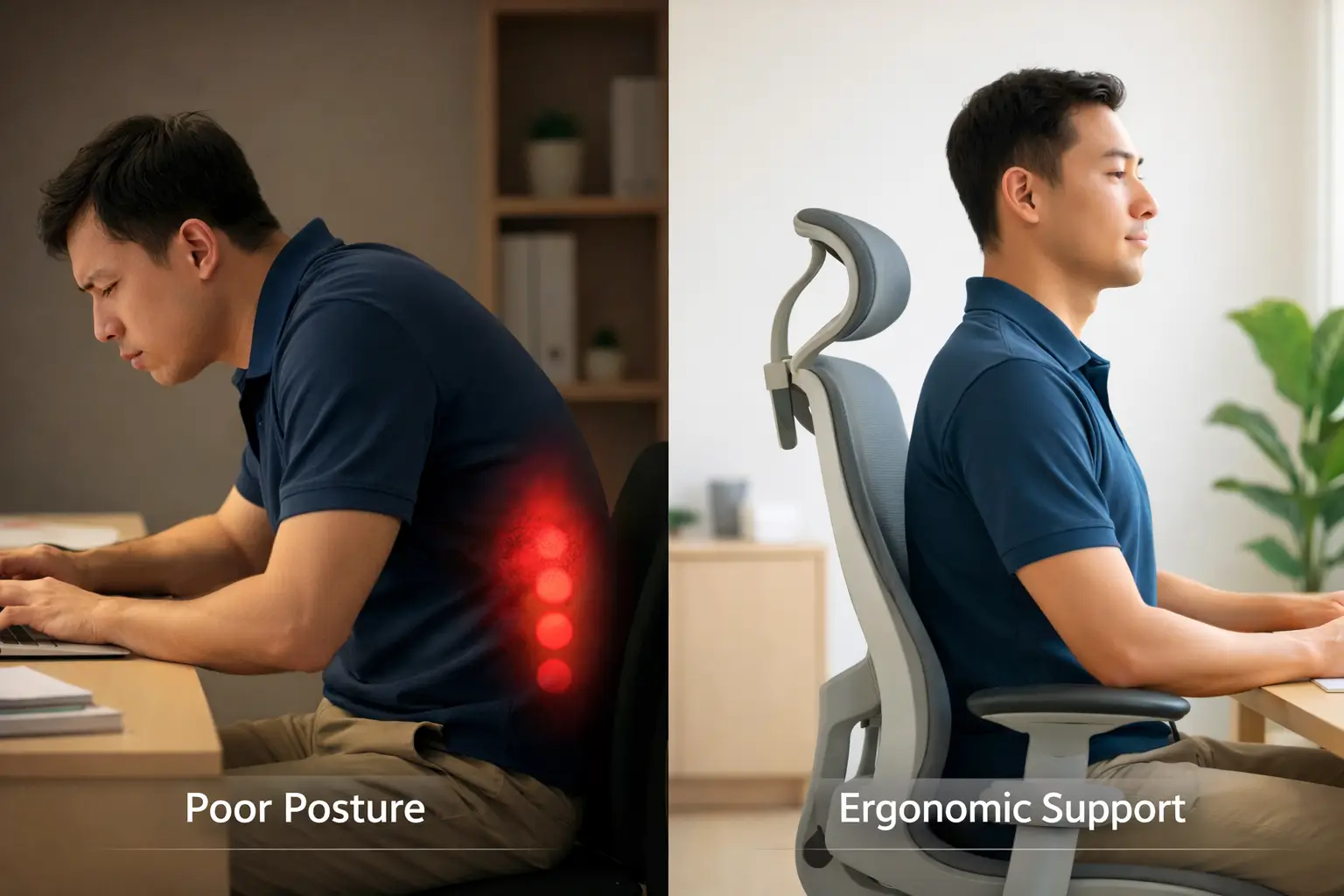
Sitting for extended periods can place stress on the spine and surrounding muscles. Without proper support, the body gradually moves into unnatural positions that increase strain on the lower back.
- Static posture – Sitting for long hours reduces blood circulation and stiffens spinal structures.
- Lack of lumbar support – Without proper support, the spine may collapse into a curved position, increasing pressure on muscles and discs.
- Non-adjustable seating – Fixed chairs can force the body into awkward positions that lead to discomfort over time.
These factors highlight the importance of properly designed office furniture in modern workplaces.
Understanding Ergonomics in Office Seating
Ergonomics focuses on designing products and environments that support the natural movement and posture of the human body. In workplace seating, ergonomic design helps reduce strain on the spine and encourages healthier sitting habits.
Ergonomic office chairs typically provide features such as:
- Support for the natural curve of the spine
- Adjustable seat height and seat depth
- Reclining mechanisms for posture variation
- Adjustable armrests to reduce shoulder tension
- Flexible backrests that adapt to body movement
These features allow office workers to maintain comfortable postures during long working hours.
What Research Says About Ergonomic Seating
Research on workplace ergonomics suggests that well-designed office chairs can help reduce discomfort and improve workplace productivity. Studies focusing on office environments have shown that adjustable seating and proper workstation design may reduce the risk of lower back discomfort in certain conditions.
However, ergonomic chairs should not be viewed as a medical solution. Instead, they are one part of a broader strategy that includes regular movement, proper desk setup, and healthy working habits.
Merryfair’s Approach to Ergonomic Office Furniture
As a leading office furniture manufacturer, Merryfair focuses on designing chairs that adapt to the human body rather than forcing the body to adapt to the chair. Their designs incorporate ergonomic principles aimed at improving comfort and supporting natural movement.
For example, the WAU chair includes a glide mechanism that moves naturally with the user’s body, along with adjustable lumbar support that helps maintain comfort during long working hours.
Rather than claiming to cure back pain, Merryfair chairs are designed to promote healthier sitting habits and support modern workplace environments.
Conclusion
Back pain continues to affect millions of workers worldwide, especially in office environments where long hours of sitting are common. Ergonomic seating, combined with healthy workplace habits, can play an important role in improving comfort and reducing strain on the body.
By aligning design with ergonomic research and modern workplace needs, Merryfair contributes to creating healthier work environments where employees can remain comfortable, productive, and focused throughout the day.